
It’s all about making that great first impression, and ClientVenue helps you achieve it effortlessly. ClientVenue’s integrated invoicing feature keeps your financial transactions organized and efficient. Finally, adjustments are made to ensure that the debits match the credits in the balance sheet. With this efficiency report, you can determine high-performing employees and those who may need additional training or support. For instance, if some employees generate more revenue than others, you may want to study their working styles and replicate them across your agency.
Essential Services and Tools
With Productive’s Budgeting, you can set up your agency rate cards, create and send estimates to potential clients, and use this data to build budgets of various types. For long-term projects, you can also split up your budgets into separate phases for easier cash flow management. Accurate and reliable time tracking improves project estimation, supports project schedules, and streamlines resource scheduling.
Tax Deductible Expenses in the Industry
Tracking overhead costs separately from billable costs in your accounting system helps identify opportunities to How to Run Payroll for Restaurants cut non-essential costs, improving your agency’s profitability. Additionally, tracking deferred revenues shows how much of your agency’s cash balance could potentially be refunded to clients. Not tracking deferred revenues as a liability would give a false impression of how much cash your agency has to cover operating costs at any given point in time. A large receivables balance could indicate trouble collecting payments from clients, so monitoring receivables in your accounting system will help prevent cash flow issues. Billable hours are time an employee spends working on a client’s project that will be billed to the client. Not all agencies will use billable hours, but it’s important for any agency to understand how labor costs are allocated to client projects in order to monitor project-profitability.
Best Practices for Sustainable Financial Management
A professional accountant may not be necessary for tasks like bookkeeping, tax preparation, and general financial management. However, you will almost certainly require one if your business expands to the point where you need a loan or if you ever undergo an audit. A creative industry accountant offers a wide range of project-based reports that are valuable. Their expertise lies in the knowledge of your agency’s nature and the key performance measures.

Select the method of accounting: cash or accrual
- Having a plan for cash flow helps prevent shortages and ensures your agency can cover expenses without issues.
- Most accountants don’t understand the nuances of running a digital agency—but we do.
- Productive allowed us to bring it all under one umbrella, which means we got a better picture of our business as a whole.
- When you need to make important business decisions or apply for loans, having intermingled finances can prevent you from getting a clear picture of your business performance.
- Advertising agency accounting involves the management of finances and financial processes specific to advertising agencies.
These savings enable agencies to afford dedicated accounting resources earlier in growth trajectories, improving financial management quality during critical scaling phases. Each scenario should model required team expansion, facility needs, working capital requirements, and resulting profit margins as fixed costs get absorbed across growing revenue bases. This modeling reveals investment requirements including $150,000 to $400,000 in working capital and $75,000 to $200,000 in new hire costs to support $500,000 to $1.5 million revenue growth.
This means that employees can focus more on strategic financial analysis rather than getting bogged down by routine administrative work. We invite you to take a look at the different kinds of businesses, organizations, and industries we service to gain a better sense of how Profit Line can help you on your path to success. It is important to consult with a qualified tax professional or accountant to ensure compliance with local tax regulations and to maximize the available deductions. Use it monthly to track profits, spot issues, and make key changes to your business model. Maintain payment records, tax filings, accountants for marketing agencies and contracts to stay in line with legal rules. A clear layout avoids confusion and helps clients pay without delay or questions.
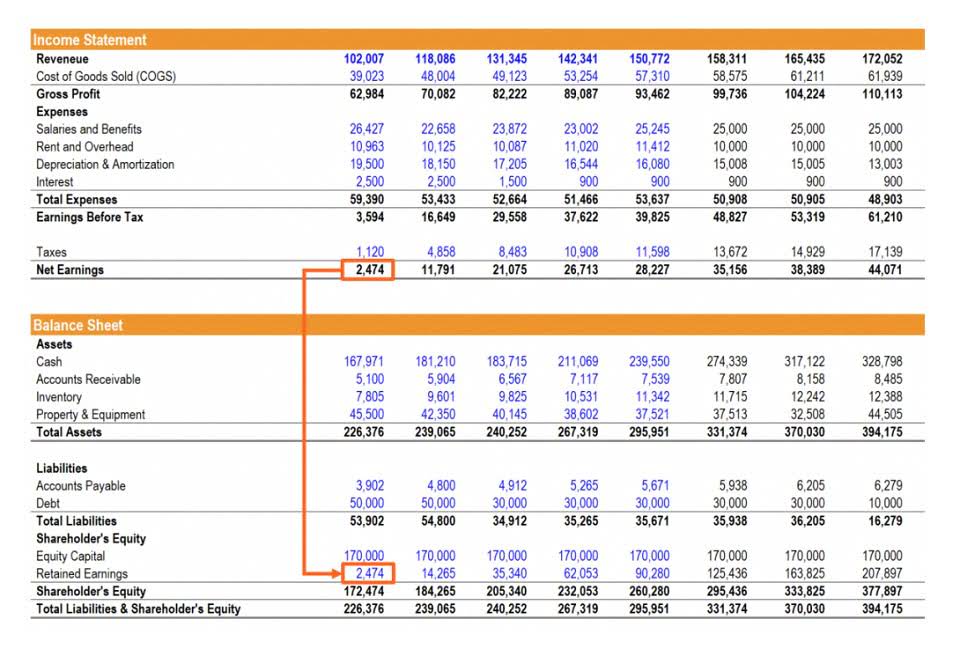
Prepare periodic financial statements, including the income statement (profit and loss statement) and balance sheet. These statements provide an overview of your agency’s financial performance and position. Pass-through expense handling requires careful accounting treatment to avoid inflating agency revenue and expense figures. When agencies receive $50,000 from clients for Facebook advertising, this should be recorded as liability (client funds held) rather than agency revenue.
- To maintain organized financial records and ensure accurate reporting, creating a well-structured chart of accounts is essential.
- Good bookkeeping for marketing agencies helps you track all income and costs with ease.
- To adhere to regulatory requirements and tax codes, your agency must prepare annual financial statements.
- The accounting is responsible for preparing and evaluating the annual financial statements using which you can monitor your marketing agency’s sales and spending trends and plan for expansion or cost savings.
- Data is pulled from your billed hours, or uninvoiced amounts on fixed-price projects, in order to generate invoices quickly.
Agencies regularly face unpredictable cash flow due to project-based work. It explores strategies that can help you maintain better financial control and leverage industry-specific accounting software. This is why creating a system for documenting all expenses needs to be a priority. You can use digital tools to capture receipts immediately, require detailed descriptions for all expenses, and maintain clear categories that align with your marketing agency accounting structure. Accrual accounting is a more sophisticated method often used by larger agencies and is essential for any accounting for digital marketing agency operations that want a more comprehensive financial picture. By implementing these core accounting practices, agencies can maintain organized financial records, deliver accurate reporting, and build a foundation for sustainable growth and client trust.
Purpose of Advertising in Financial Reporting

The agency’s cost to acquire a new client, whether through advertising or another channel. A downward trend indicates that the agency is spending less to acquire clients. Account reconciliations are important because they validate the accuracy of your agency’s financials.
Better management of costs often turns up unspent funds, which in turn enhances the efficiency of media expenditures. At this point, the flanking participants, advertiser and media, will complete the transaction; the media will provide an adjusted bill to the agency, which will rebill the adjustments to the client. This process requires sophisticated computer systems and training on how to use them, expertise in managing the multiple layers and parties, and experienced financial staff. It includes the clearance of an enormous volume of transactions, each of which must be individually resolved, adjusted, appropriately accounted for, and settled. The agency must demonstrate a high level of professionalism and https://www.bookstime.com/ knowhow in order to satisfy its fiduciary responsibilities to the advertiser. One of the standout features of Xero is its invoicing tool, which allows businesses to create professional-looking invoices that are fully customizable with their branding.